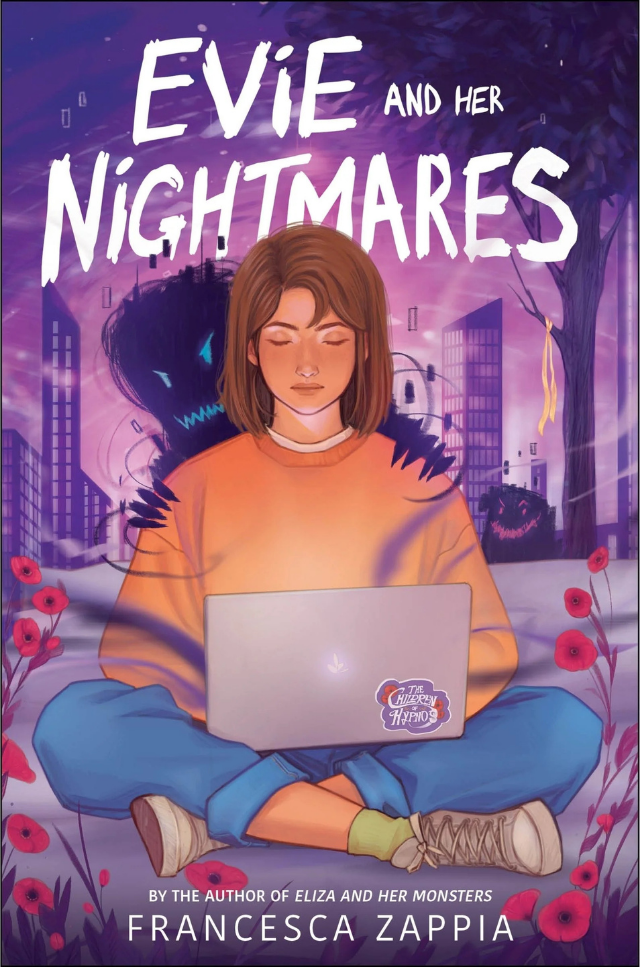
Francesca Zappia’s Evie and Her Nightmares, a poignant and layered young adult novel, is a portrait of a teen learning to live alongside her grief. Its opening sentence sets up the tension: “Everyone lies at funerals.” This is indeed a story about death and hidden truths, including the truths we hide from ourselves.
The funeral opening the story is for protagonist Evie Leigh’s best friend Alissa, who died in an apparent suicide. Evie is unmoored, swept away by guilt and unanswered questions. To cope, she dives into Alissa’s favorite online role-playing game, Children of Hypnos. She also begins to read the incomplete book series from which the game takes inspiration.
Children of Hypnos follows the students of Fernhallow Academy as they become dreamhunters, people who fight nightmares that have escaped into the waking world. The game is folded into the book’s text via chat logs, player guides (including a helpful glossary of gaming terms), dialogue boxes, and character art.
The books and game, which Evie had never gotten into while Alissa was alive, allow her a continued chance to connect with her friend. She also finds connection with Alissa’s older brother Ash, another high-level player. Most dangerously, however, the game provides Evie endless opportunities to escape reality. Sinking a lot of time into the game makes Evie feel like she’s getting closer to something, but she’s shirking her responsibilities at school and on the track team.
Meanwhile, people are trying to help Evie. Her mother is no stranger to grief, having lost her husband to cancer when Evie was very young. Evie sees a therapist, but she doesn’t honestly engage with the intake assessment—it’s not just funerals where people lie!
Evie is an easy character to root for, someone whose impulses are all too understandable. My heart ached for her as she lashed out at the people around her, and dread pooled in my stomach as she made one bad decision after another. While the story doesn’t center around Evie’s autism, she is aware how it colors her interactions, and how grief makes things even trickier for her.
What I loved most about the book was how deeply Children of Hypnos matters to the story, with rich metaphors and clever parallels. What is losing one’s best friend if not a nightmare? Ultimately, dreamhunters and the nightmares they slaughter help Evie understand Alissa’s death, but not how she expects they might. The story ends on a satisfyingly optimistic note, neither too neatly tied up nor too frustratingly loose. All told, the book is a beautiful exploration of grief and a fresh, nuanced look at fandom. Readers seeking realistic fiction with big feelings and messy characters will love it.