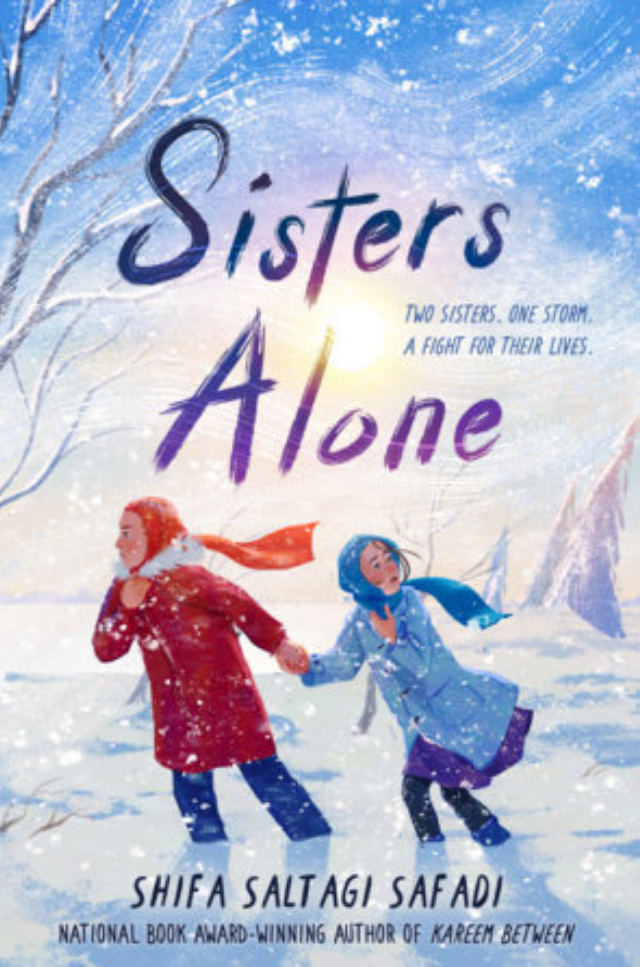
Sisters Alone by Shifa Saltagi Safadi is a powerful, tense, ultimately sweet story about the struggles of two very different sisters who must band together to survive a severe winter storm.
Big sister Rama (8th grade) and little sister Leena (6th grade) lost their mother in a car accident six months ago. Ever since, Rama has been fighting anger and intrusive thoughts, which cause her to lash out uncontrollably at the people she loves. She’s also struggling to maintain a best friendship that she fears is slipping away due to these changes in her. Meanwhile, Leena is fighting guilt over her struggles with schoolwork (she reads as undiagnosed ADHD or similarly neurodivergent) and she makes a lot of missteps over her schedules and daily responsibilities, to the point where she believes her scattered forgetfulness is the cause of her mother’s death.
When the girls inadvertently get stuck home alone during their father’s business trip, a massive blizzard strikes their Valparaiso home. As Rama and Leena weather the storm that threatens their lives, they are reminded that despite their differences and minor sibling conflicts, they can rely on each other to get through hard times.
The verse narrative alternates between Rama’s point-of-view and Leena’s point-of view. Both characters are believable and relatable, as is the core message of the story: when you feel most isolated and damaged, communicating with people you trust about the struggles in your head is the path to connection and healing.
The structure and form of the poetry, by and large, works well to support and enhance the underlying emotional narrative as well as the tense action sequences. There were some moments early in the book where the lineation felt unnecessarily choppy, particularly in the moments of relative calm that fall between the parallel storms of action and emotion erupting throughout. However, that’s likely a picky grownup critique—the white space created on the page will make the story inviting to and digestible for young readers.
Toward the end of the novel, Rama’s growth arc looms a bit larger than Leena’s. A thoughtful, helpful author’s note at the end addresses the issue of intrusive thoughts, with mental health resources provided. As a reader who identified more with Leena’s struggles, I found myself wishing for a smidge more resolution to her side of the story, or a similar back matter note to support readers who might be struggling with executive function as Leena appears to be. I offer that as a thought primarily for teachers/librarians/parents who share the story with young readers—you may want to have a few ADHD-related resources in your back pocket to supplement just in case.
All told, this is a highly recommended read for children that will entertain, inspire, and educate all at once.